
Case study · Great-toe abscess with distal phalanx osteomyelitis
A limb-preservation pathway for toe osteomyelitis
A complex great-toe infection in a patient with multiple comorbidities, where treatment decisions required close clinical review.
01
Presentation
02
Clinical care
03
Follow-up
Clinical context
Presentation and assessment.
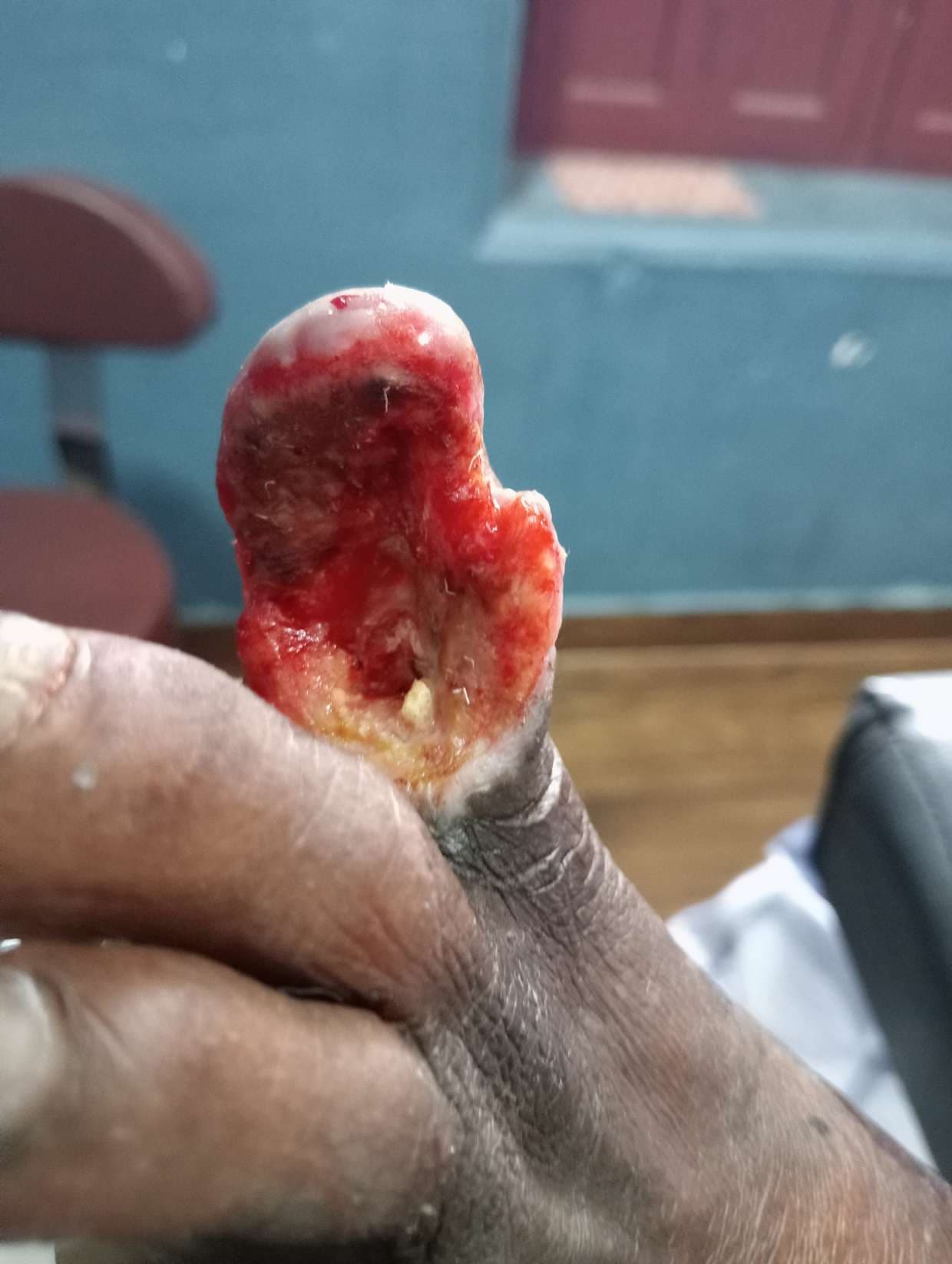
60-year-old male. The patient presented with a right great-toe abscess and distal phalanx osteomyelitis alongside poorly controlled diabetes, grade 3 hypertension, COPD and coronary artery disease.
Care pathway documented in this case
- Distal phalanx osteotomy
- Further proximal phalanx osteotomy after non-recovery
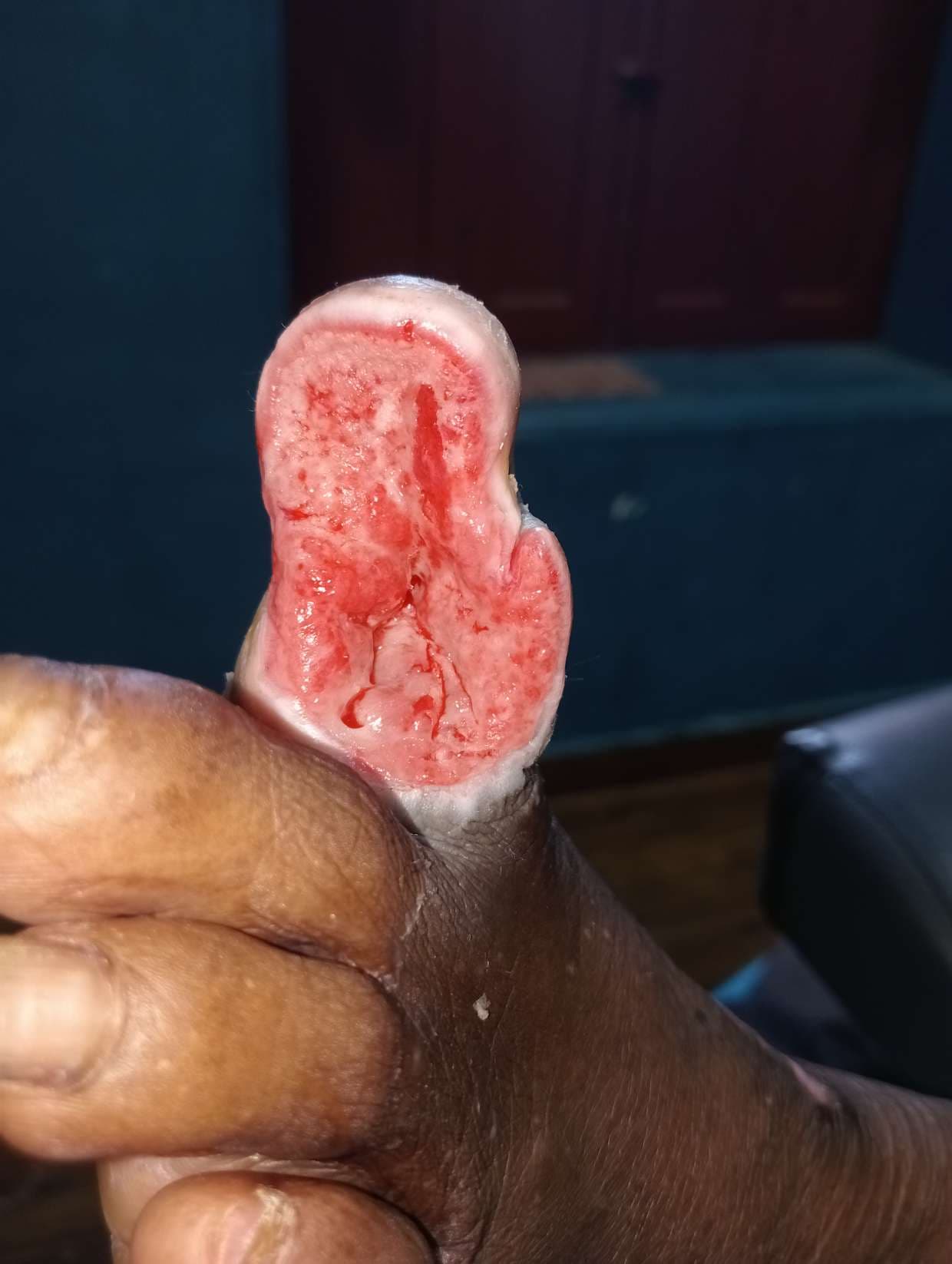
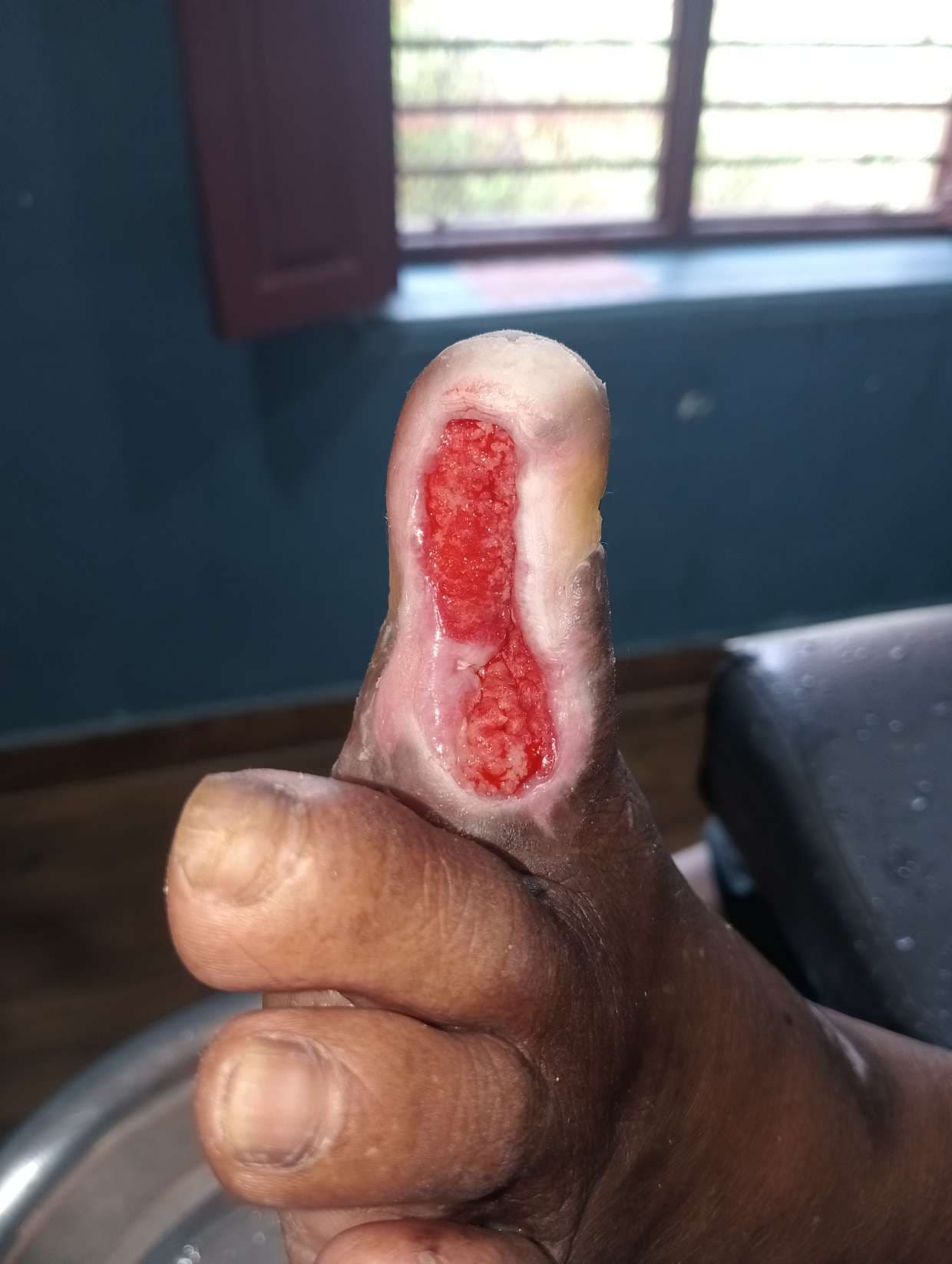
- Collagen powder dressing within the wound-care plan
Outcome & follow-up
Progress is recorded with context.
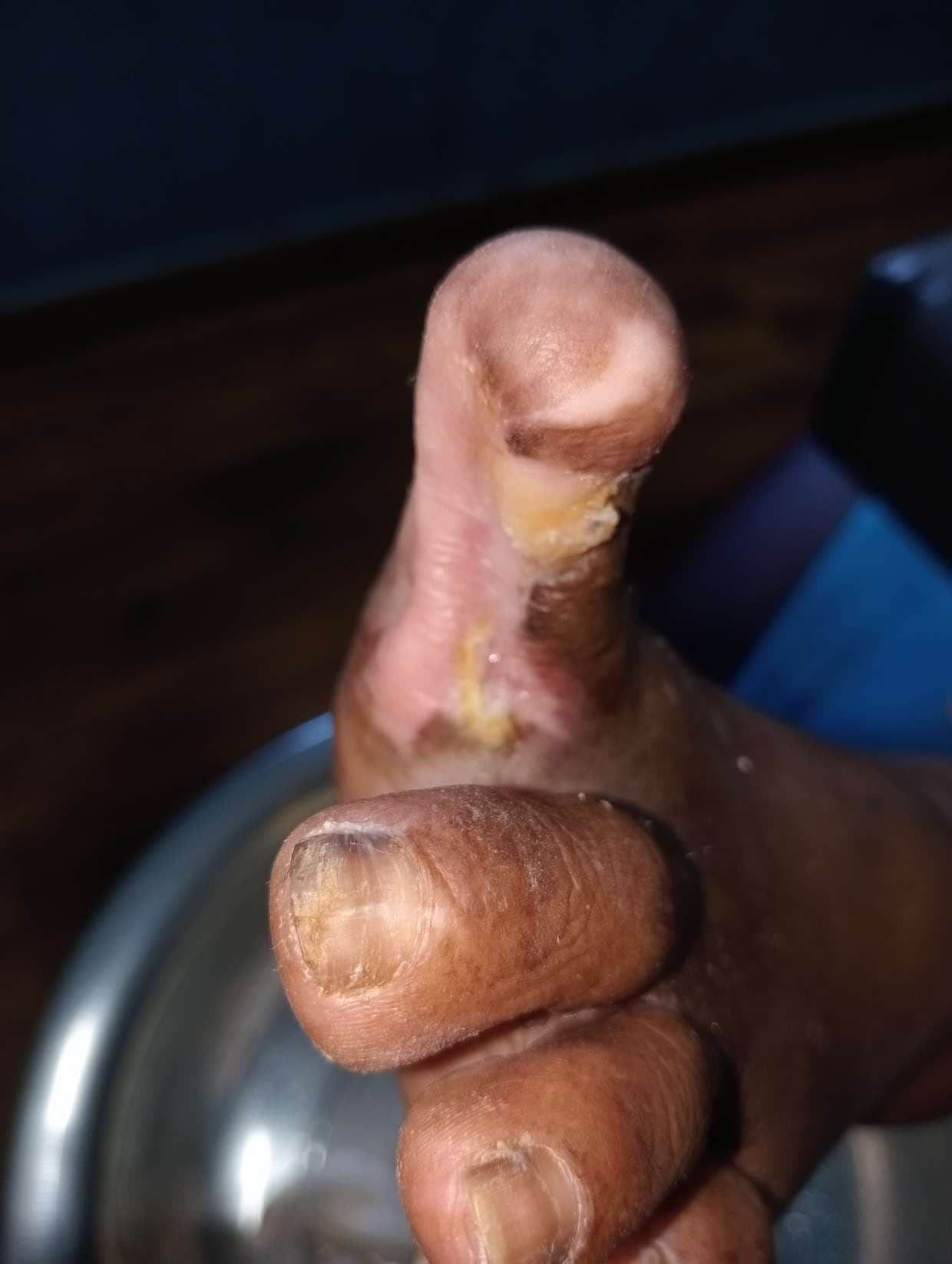
The presentation documents complete healing in 40 days and a stable one-year follow-up without recurrence.
This is a consent-led clinical record. Individual treatment pathways and outcomes vary for every patient.
A qualified clinician must assess an individual wound, circulation, sensation and infection risk before recommending care.
Clinical image record
The documented care journey.
Images are shown as part of the clinical record and should be viewed with respect for patient privacy and context.
A considered next step
Every case needs its own assessment and plan.
This record illustrates one patient journey. Speak with the MMC team to understand what assessment and care may be appropriate for your situation.