
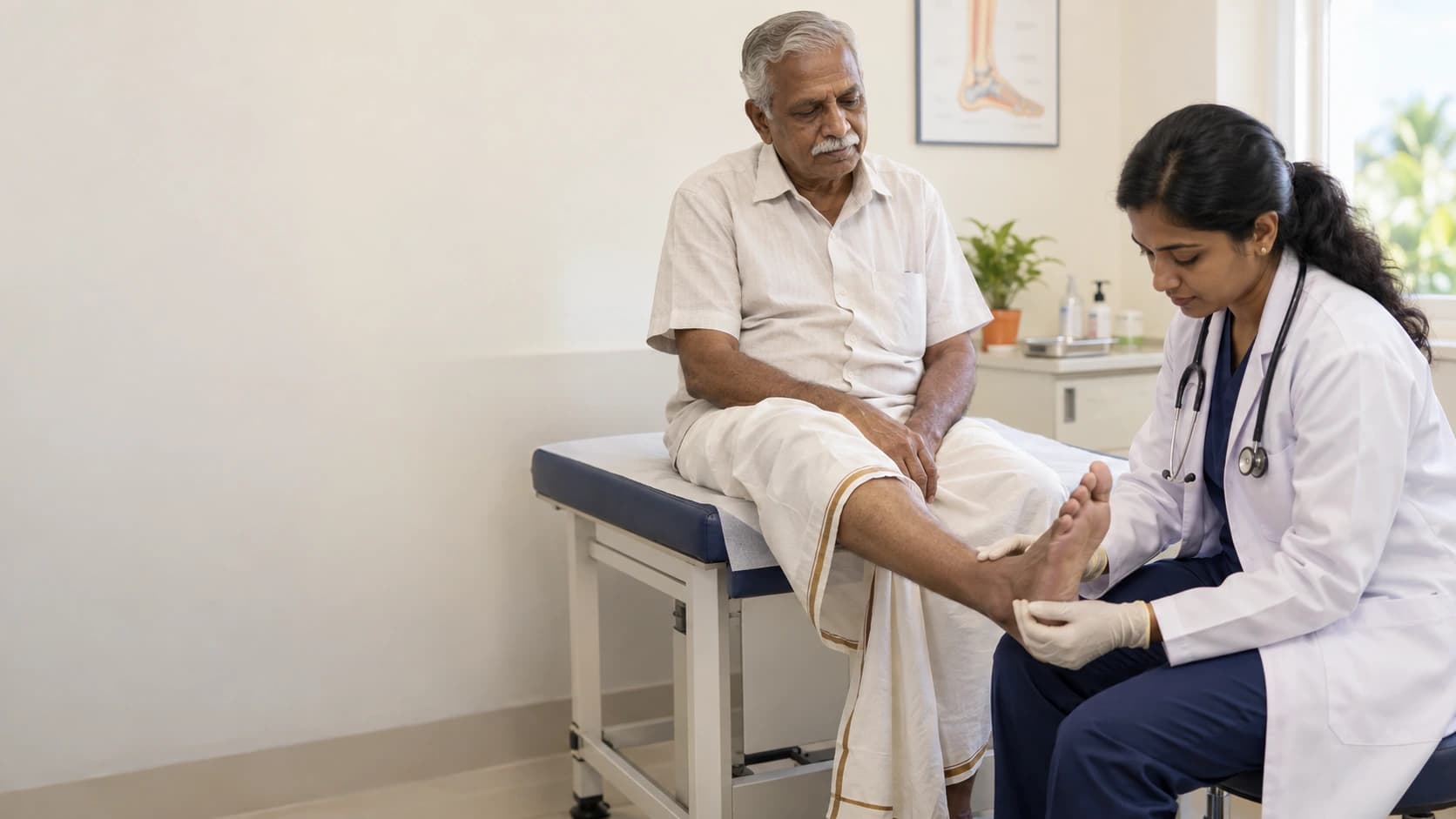
A cut, blister or open sore that does not improve
Condition guide
Diabetic Foot Ulcer
An open foot wound that needs timely, specialist assessment—especially when diabetes, reduced sensation or poor circulation are involved.
An ulcer may not feel painful when diabetes affects sensation. Do not wait for it to become worse or for a new odour, colour change or swelling to appear.
Understanding foot ulcers
The visible wound is only part of the problem.
An open foot wound that needs timely, specialist assessment—especially when diabetes, reduced sensation or poor circulation are involved.
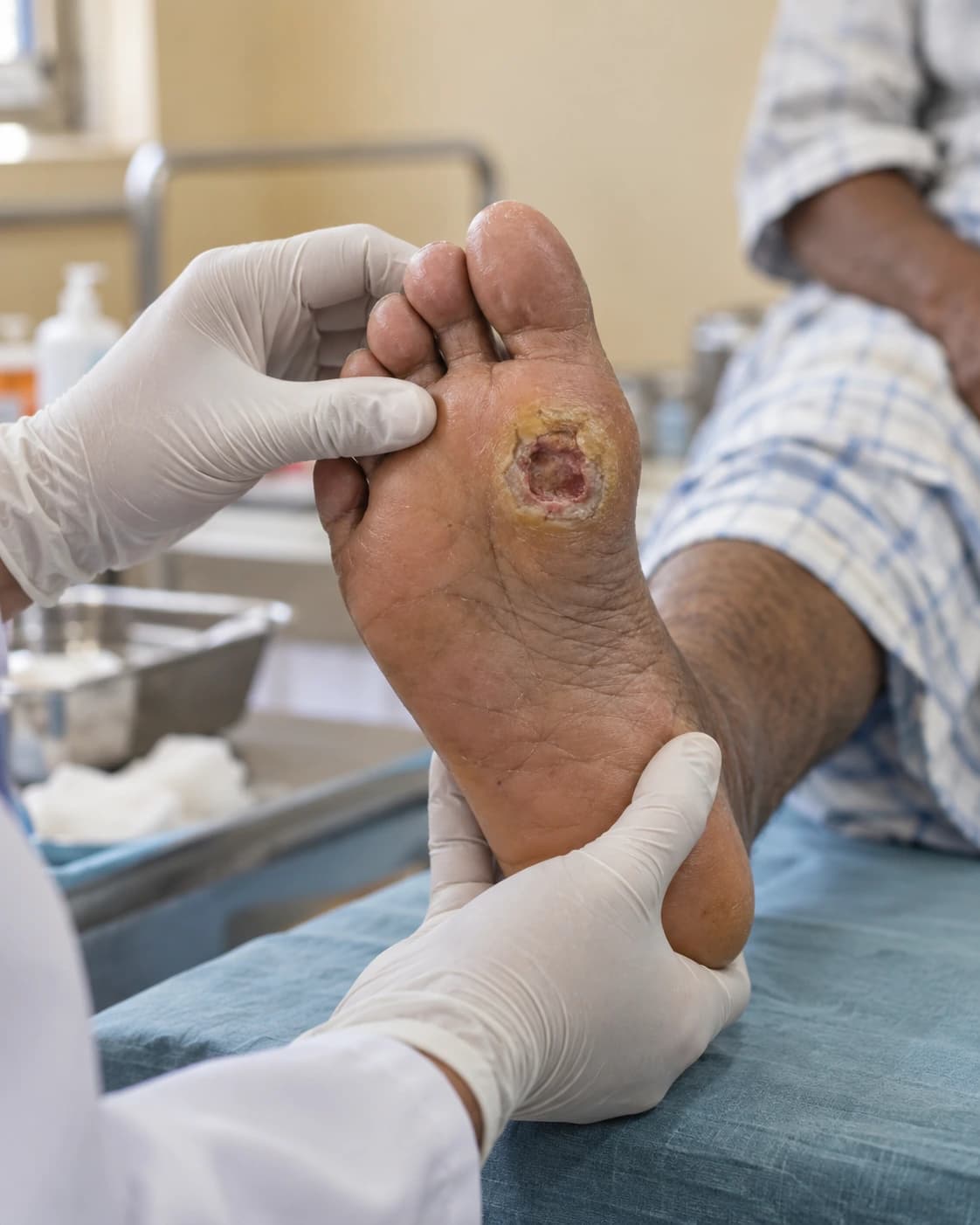
A diabetic foot ulcer usually develops when repeated pressure or a minor injury affects a foot with reduced sensation, poor circulation or skin that is slow to heal. The visible wound is only part of the problem; pressure, infection and blood flow also need to be understood.
What patients may notice
Small changes deserve attention.
Drainage, odour, redness, warmth or swelling
Skin colour change, black tissue or increasing pain
Numbness or reduced ability to feel injury
Why ulcers develop
Several factors can come together.
Pressure, reduced sensation, circulation concerns, diabetes-related healing changes, footwear friction and minor trauma can all influence risk.
Diabetes and reduced protective sensation
Peripheral arterial disease or smoking
Previous ulcer, amputation or foot deformity
Poorly fitting footwear, callus or walking barefoot
When to seek prompt care
Do not wait for an ulcer to become painful.
Spreading redness, warmth, swelling, discharge, odour, dark tissue, fever, increasing pain or a rapidly changing wound should be assessed promptly.
How MMC evaluates the ulcer
Assessment follows the whole clinical picture.
Assessment may include wound measurement, skin and temperature review, sensation testing, pulse checks, pressure and footwear assessment, infection review, and Doppler, ABI, imaging or referral when indicated.
Wound and infection review
Circulation and sensation
Pressure and footwear
Referral when indicated
Clinical detail
Related treatments
Care is matched to the wound and the person.
Continue the care journey
The right next step depends on the clinical picture.
Explore the related pathways that may be discussed after assessment.


Daily protection matters.
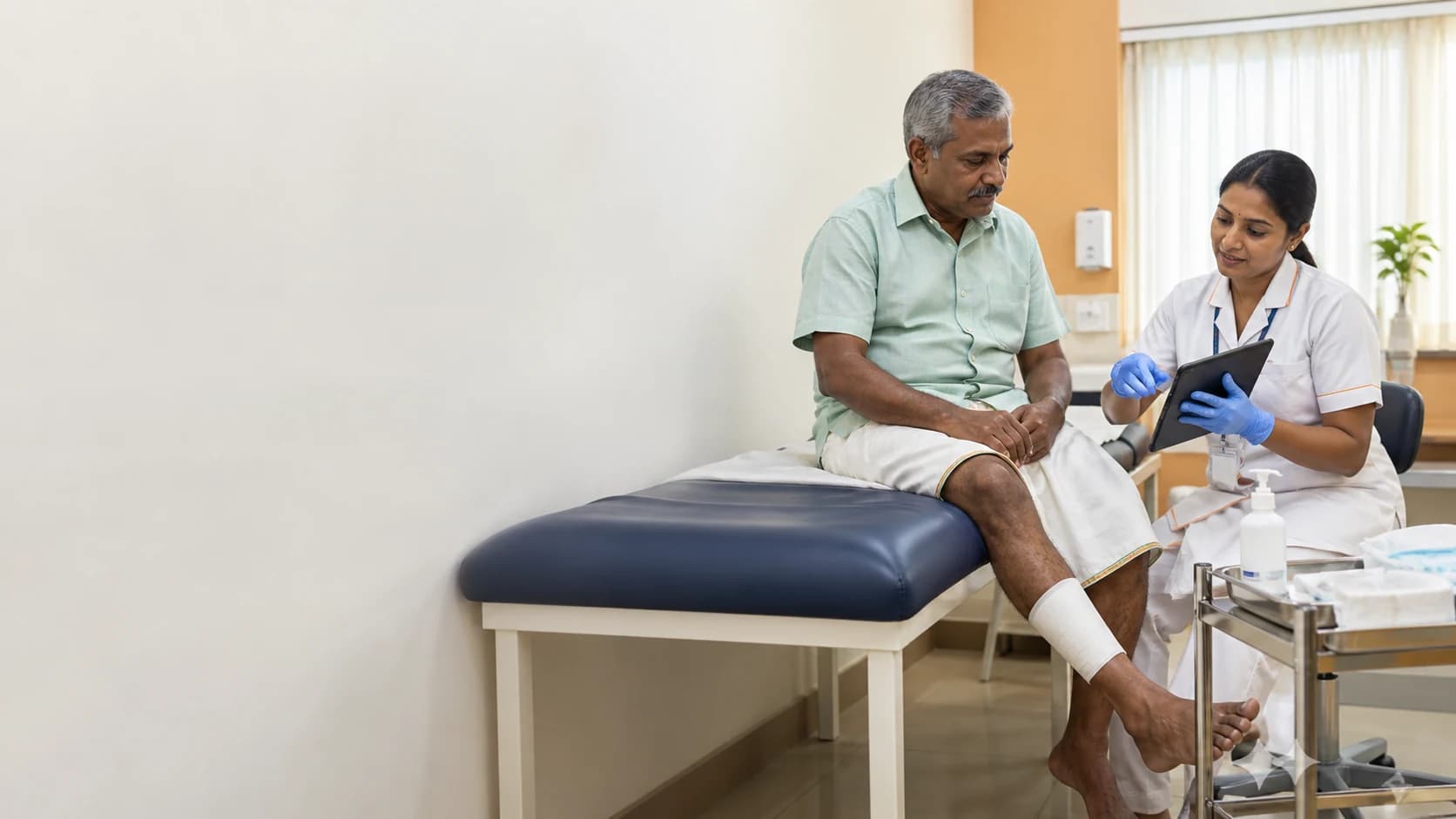
Keep the area clean and protected, reduce pressure as advised, avoid walking barefoot and check both feet regularly when sensation is reduced.
More foot-care guidanceFollow-up should be active.
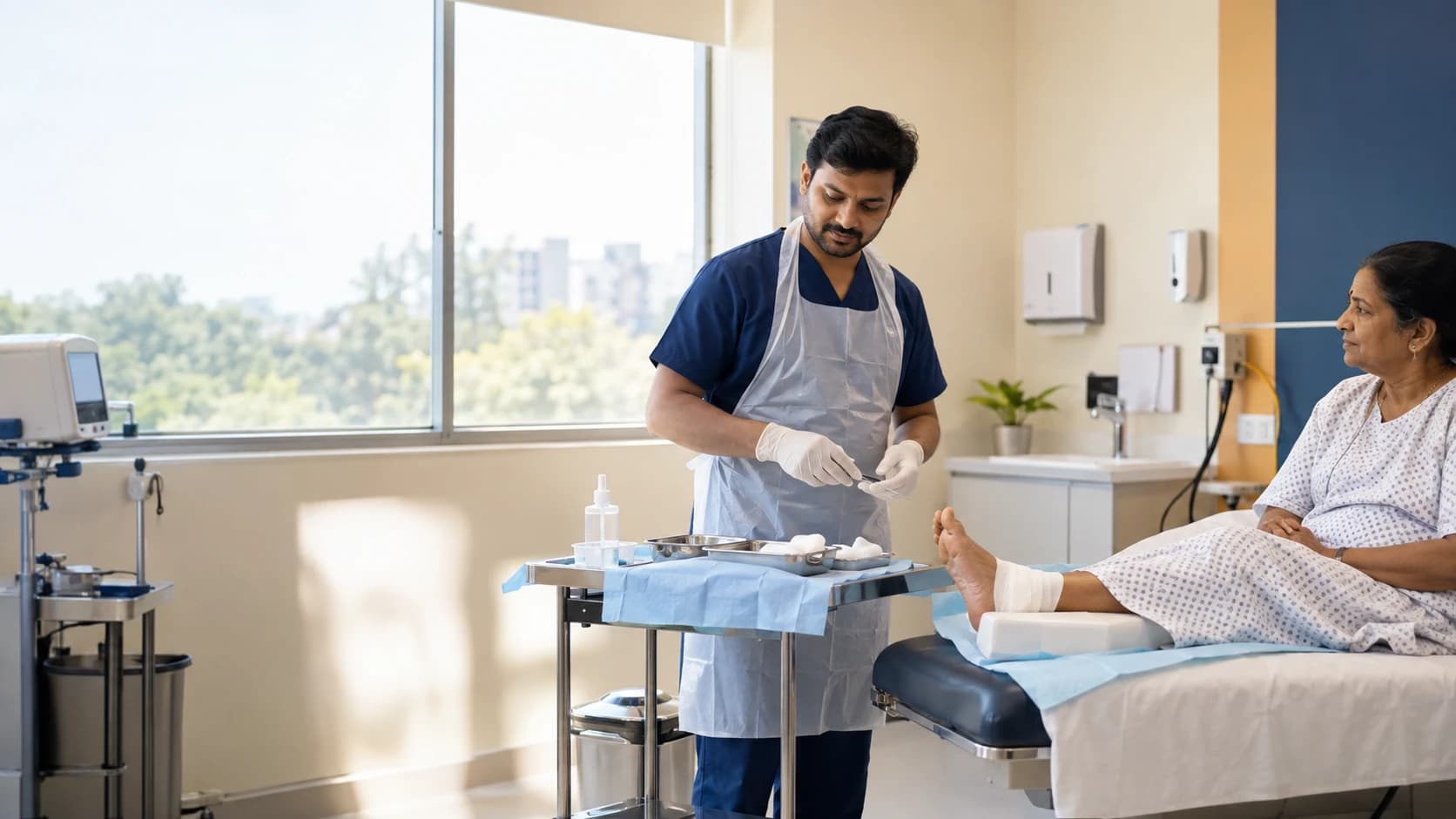
Healing time varies with wound depth, infection, circulation, pressure relief and general health. The plan may need to change as the wound changes.
Common questions
Can a diabetic foot ulcer be painless?+
Yes. Reduced sensation can mean that a wound or pressure injury is not painful. A new break in the skin still needs timely assessment.
What should I do while waiting for an assessment?+
Keep the area clean and protected, avoid walking barefoot and reduce pressure on the wound. Do not cut, pare or apply unadvised products to it.
When is a foot ulcer urgent?+
Prompt medical advice is important if there is spreading redness, warmth, swelling, discharge, odour, dark tissue, fever, increasing pain or a rapidly changing wound.
Make an appointment
A changing foot wound deserves a careful clinical review.
Our team can help you understand what needs assessment and what information to bring. Diagnosis and treatment depend on an in-person review.
Specialist assessmentClear next stepsIndividual care planning

Dr. A. Nirupan Chakkaravarthy
Consultant Podiatrist · Limb Salvage Specialist
This guide is for general education and does not replace an in-person assessment.