
A change in toe, arch or forefoot shape

Condition guide
Foot Deformity & Pressure Areas
Changes in foot shape can create pressure points that affect comfort, footwear fit and skin health.
A recurring callus, rubbing area or shoe that no longer fits can be an early sign that needs assessment.
Understanding the concern
The visible symptom is only part of the clinical picture.
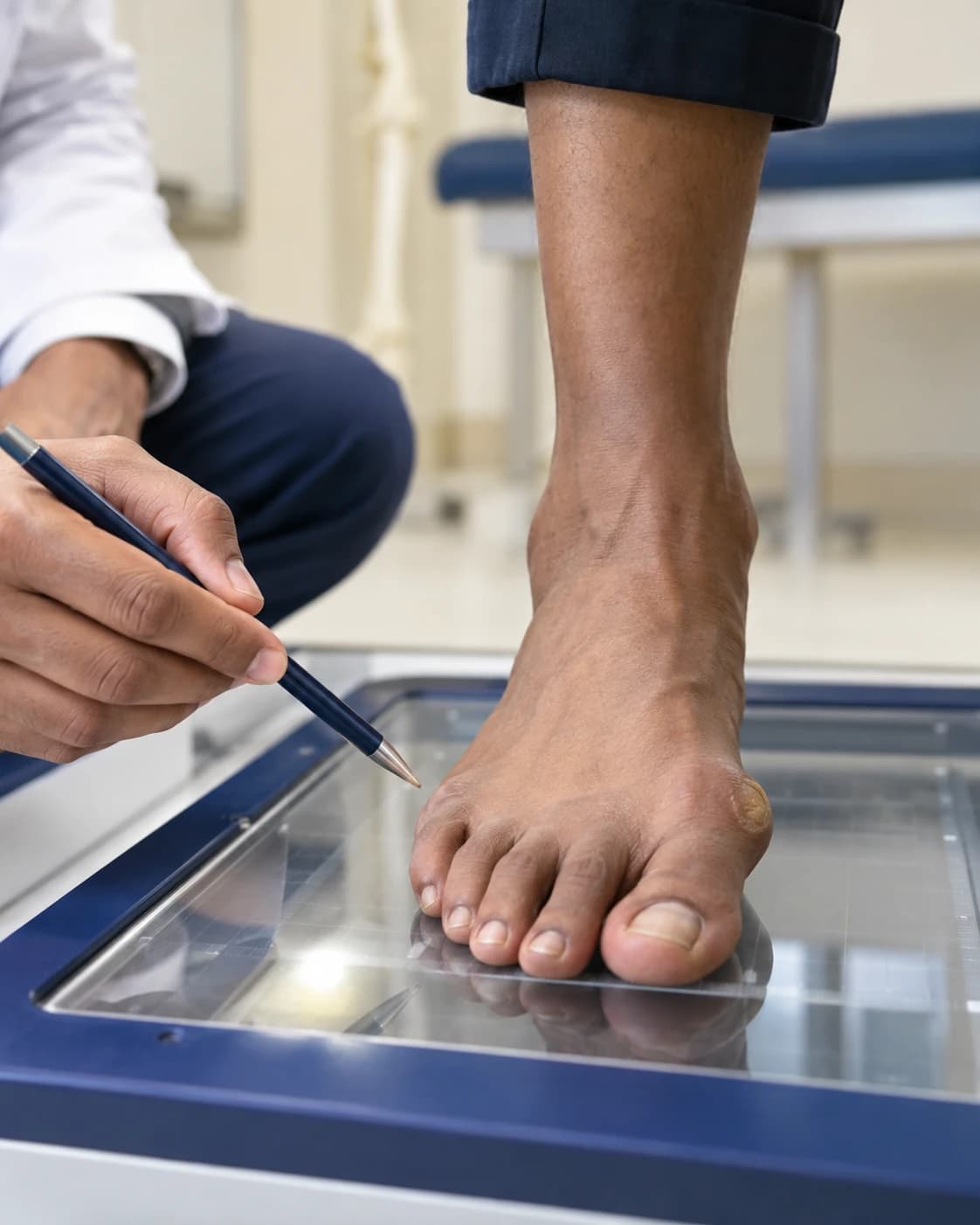
Changes in foot shape can create pressure points that affect comfort, footwear fit and skin health. Changes in foot shape can redistribute pressure during standing and walking. This may increase the risk of corns, calluses and wounds in vulnerable feet.
Clinical context
Symptoms and signs
Small changes deserve attention.
Recurring corns, callus or shoe rubbing
Pain, instability or uneven shoe wear
New pressure points or skin changes
Causes and risk factors
Several factors can come together.
Foot deformity can be inherited or develop through arthritis, tendon imbalance, diabetes-related nerve change, injury or long-term pressure patterns.
Diabetes and neuropathy
Arthritis or previous injury
Family history or flexible foot posture
Ill-fitting footwear
When to seek prompt care
Do not wait for symptoms to become severe.
A recurring callus, rubbing area or shoe that no longer fits can be an early sign that needs assessment.
MMC evaluation
Assessment follows the whole clinical picture.
The assessment considers foot shape, skin pressure points, joint movement, muscle strength, gait, footwear, sensation and circulation. Imaging may be considered if a structural concern needs clarification.
Relevant care pathways
Care is matched to the condition and the person.
Relieve pressure: Padding, footwear and orthotic guidance can help protect painful pressure areas.
Improve support: Exercises or gait-focused care may be considered according to the diagnosis.
Escalate appropriately: Surgical or specialist referral is considered only when symptoms, function or skin risk warrant it.
Protect your feet between reviews.
Keep changes protected, avoid unadvised self-treatment and seek advice if symptoms worsen or do not improve.
The next step should be clear.
A timely assessment helps match care to the diagnosis, risk and practical needs of the person.
Common questions
When should I seek urgent care?+
Seek prompt medical advice for spreading redness, a new or worsening wound, discharge, fever, black or blue skin, sudden swelling, or a foot that becomes hot, cold or painful. If you feel very unwell, seek emergency care.
Can I treat this at home?+
Avoid cutting, draining, paring or applying unadvised products. The safest next step depends on your skin health, circulation, sensation and medical history.
What should I bring to my appointment?+
Bring recent reports, your medication list, photographs or details of changes over time, and the footwear you use most often when relevant.
Continue the care journey
The right next step depends on the clinical picture.
Explore the related pathways that may be discussed after assessment.


Make an appointment
A changing foot deformity & pressure areas deserves a careful clinical review.
Our team can help you understand what needs assessment and what information to bring. Diagnosis and treatment depend on an in-person review.
Specialist assessmentClear next stepsIndividual care planning

Dr. A. Nirupan Chakkaravarthy
Consultant Podiatrist · Limb Salvage Specialist
This guide is for general education and does not replace an in-person assessment.