
Sensation and protective feeling

Treatment pathway
Diabetic Foot Care
Diabetes-focused foot screening, ulcer prevention, neuropathy assessment and ongoing protection for people at risk of foot complications.
A small cut, blister, pressure area or skin change can become serious when diabetes affects feeling, circulation or healing.
What diabetic foot care means at MMC
Prevention, protection and a plan that responds to risk.
Diabetic foot care brings together screening, wound and skin review, pressure management, circulation awareness, footwear guidance and follow-up. The right pathway depends on individual findings.
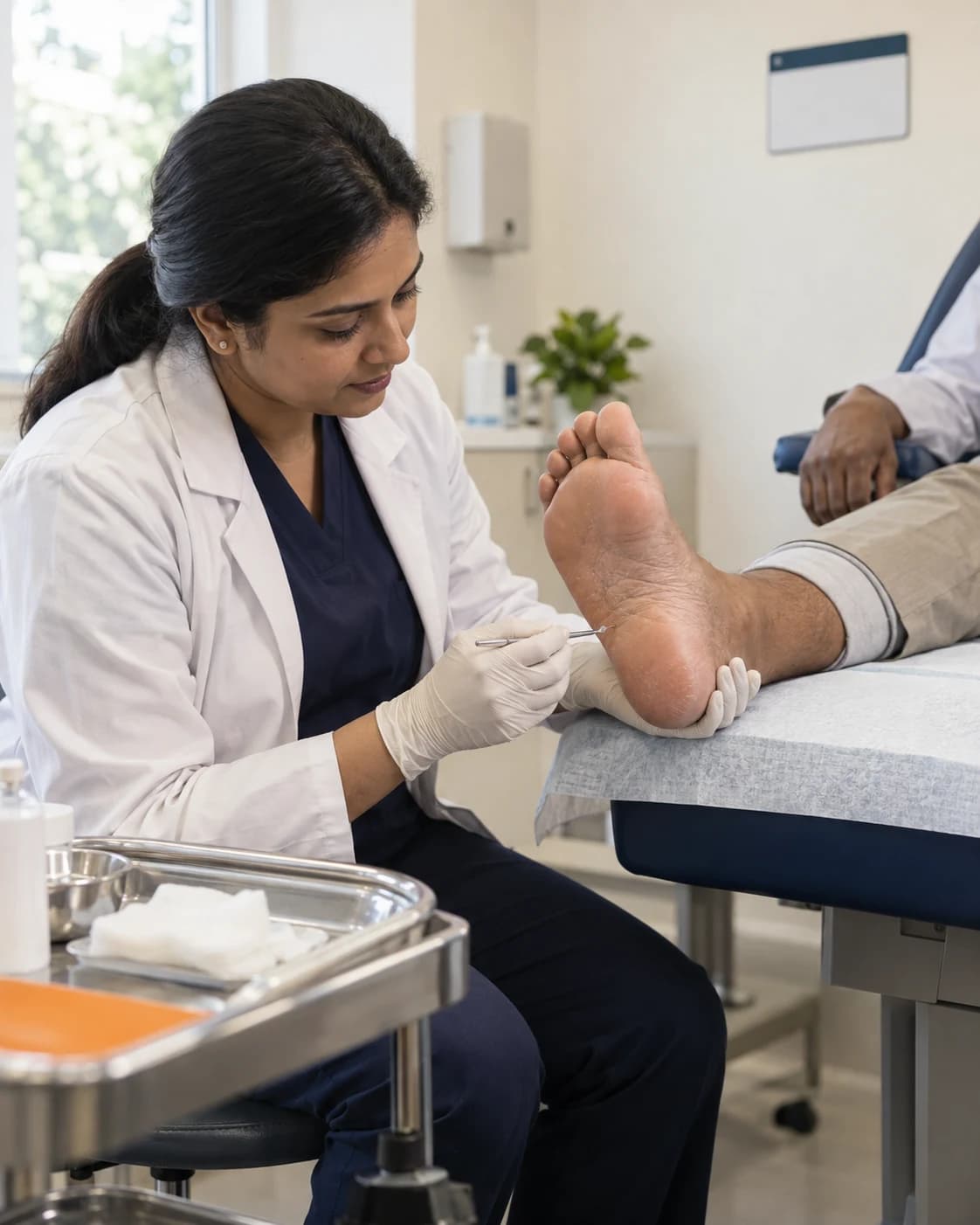
Protective foot-care detail
Who may benefit
Review can be useful before a problem becomes urgent.
01
Diabetes with numbness or reduced protective sensation
02
A previous ulcer, callus, pressure area or skin change
03
Footwear that rubs, squeezes or no longer fits well
04
Circulation concerns, swelling or a wound that is slow to heal
What the assessment may include
A structured review of foot risk.
The visit may include skin and nail review, ulcer assessment where relevant, sensation testing, pulse and circulation checks, pressure and footwear review, and discussion of your diabetes history and previous foot problems.
Skin, nail and wound review
Pulses and circulation
Pressure, foot shape and footwear
Previous problems and current risk
Prevention and follow-up plan
How the care pathway works
Assess first. Plan clearly. Review what changes.
01
Assess
Understand the skin, sensation, circulation, pressure and history.
02
Identify risk
Recognise the factors that may lead to wounds or delayed healing.
03
Plan care
Discuss prevention, wound care, footwear, offloading or referral when appropriate.
04
Follow up
Review the feet and adjust the plan when findings or needs change.
The emphasis is practical: understand risk, protect the foot and know when the plan needs review.
01
Risk assessment
Risk can change over time. Review helps guide prevention advice, follow-up and referral.
02
Wound and skin protection
New wounds, redness, swelling, discharge or colour change need prompt clinical advice.
03
Pressure management
Offloading, activity and footwear advice can help reduce repeated pressure when clinically appropriate.
04
Footwear and orthotic support
Fit, foot shape, wear patterns and pressure areas guide practical footwear discussions.
05
Follow-up
Regular review helps the plan respond to changes in the foot and the person’s health.
Related conditions
Know what may need closer attention.
Explore common foot and circulation concerns treated at MMC.
View all conditionsContinue the care journey
The right next step depends on the clinical picture.
Explore the related pathways that may be discussed after assessment.
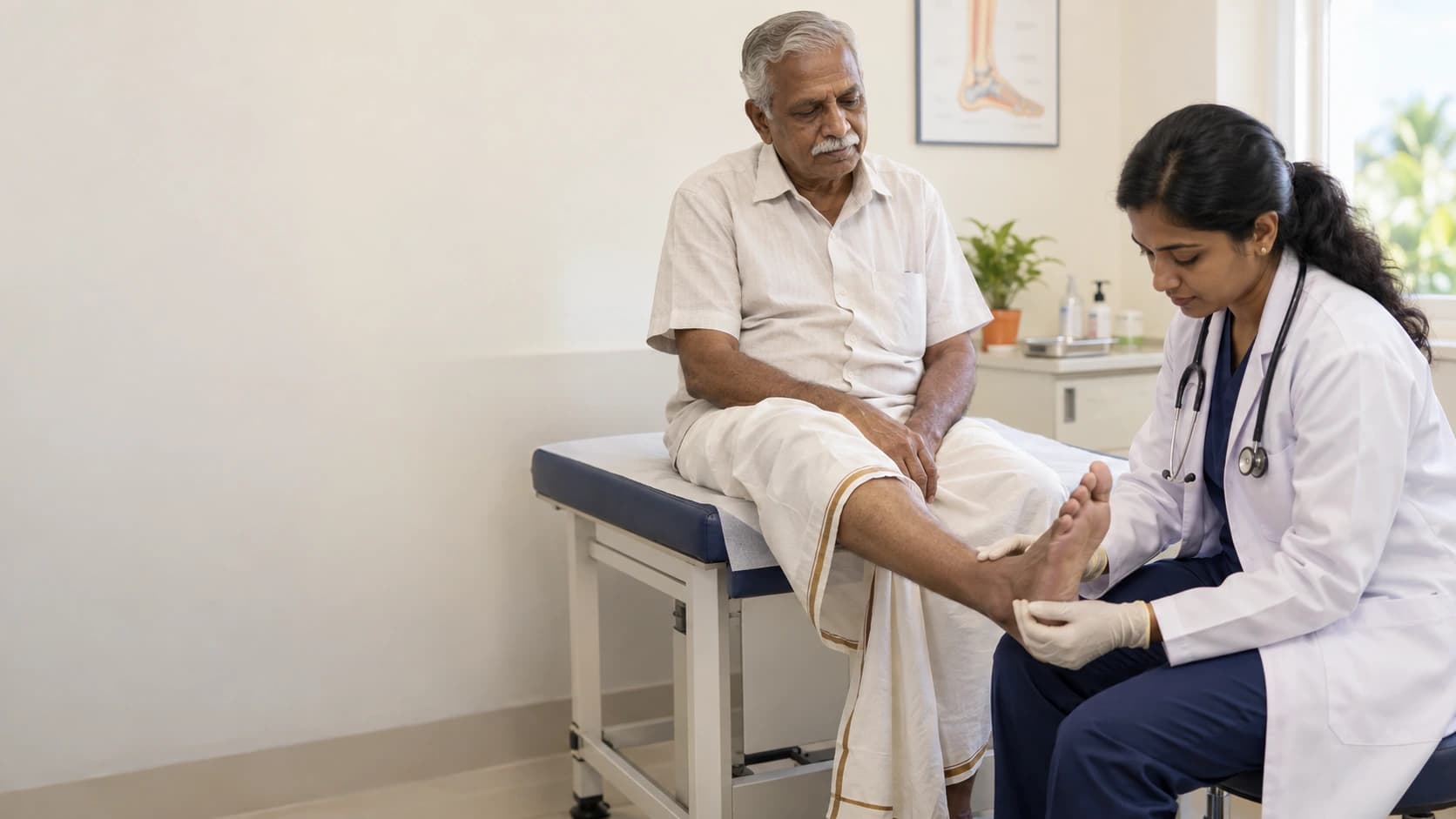
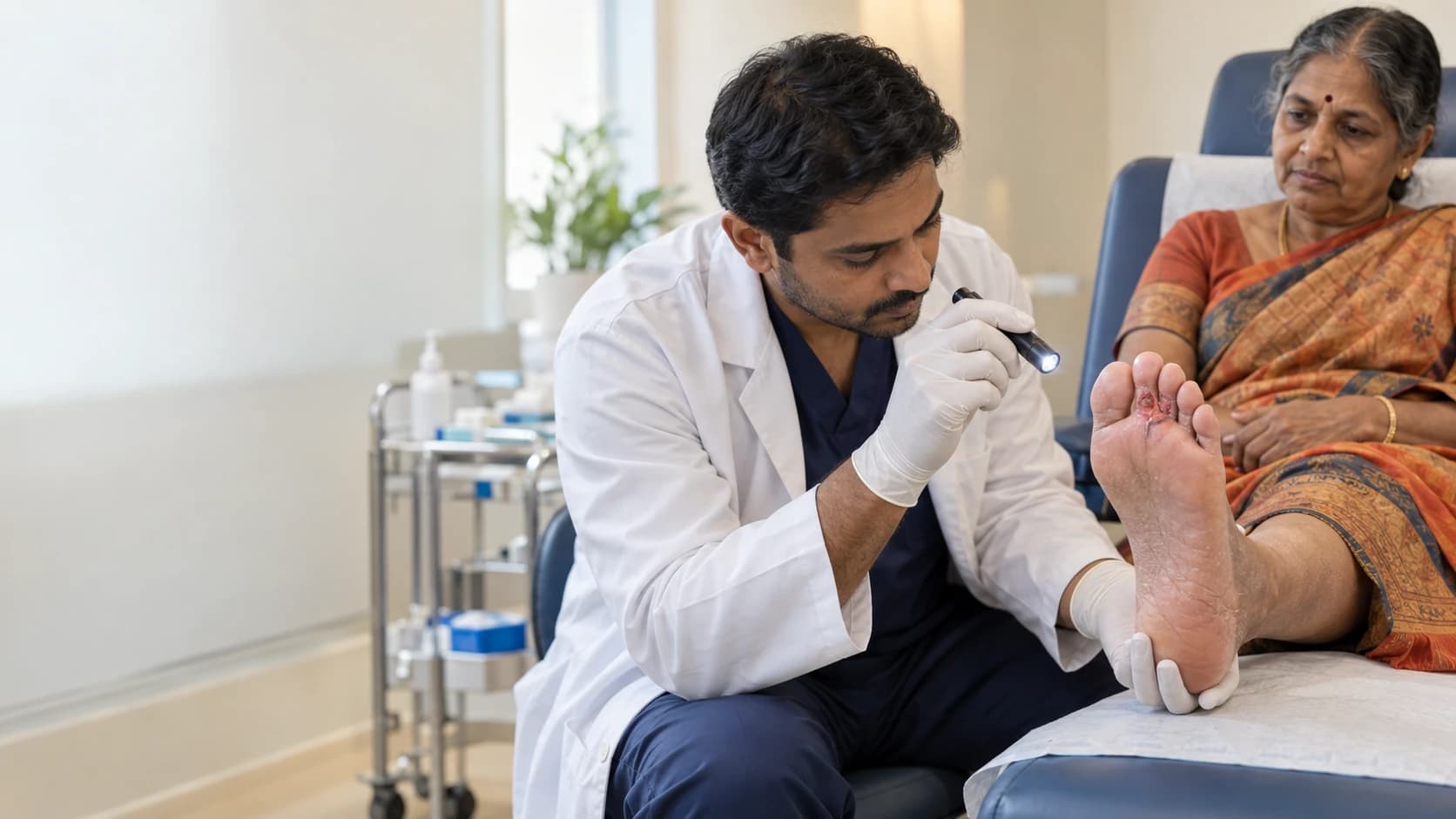
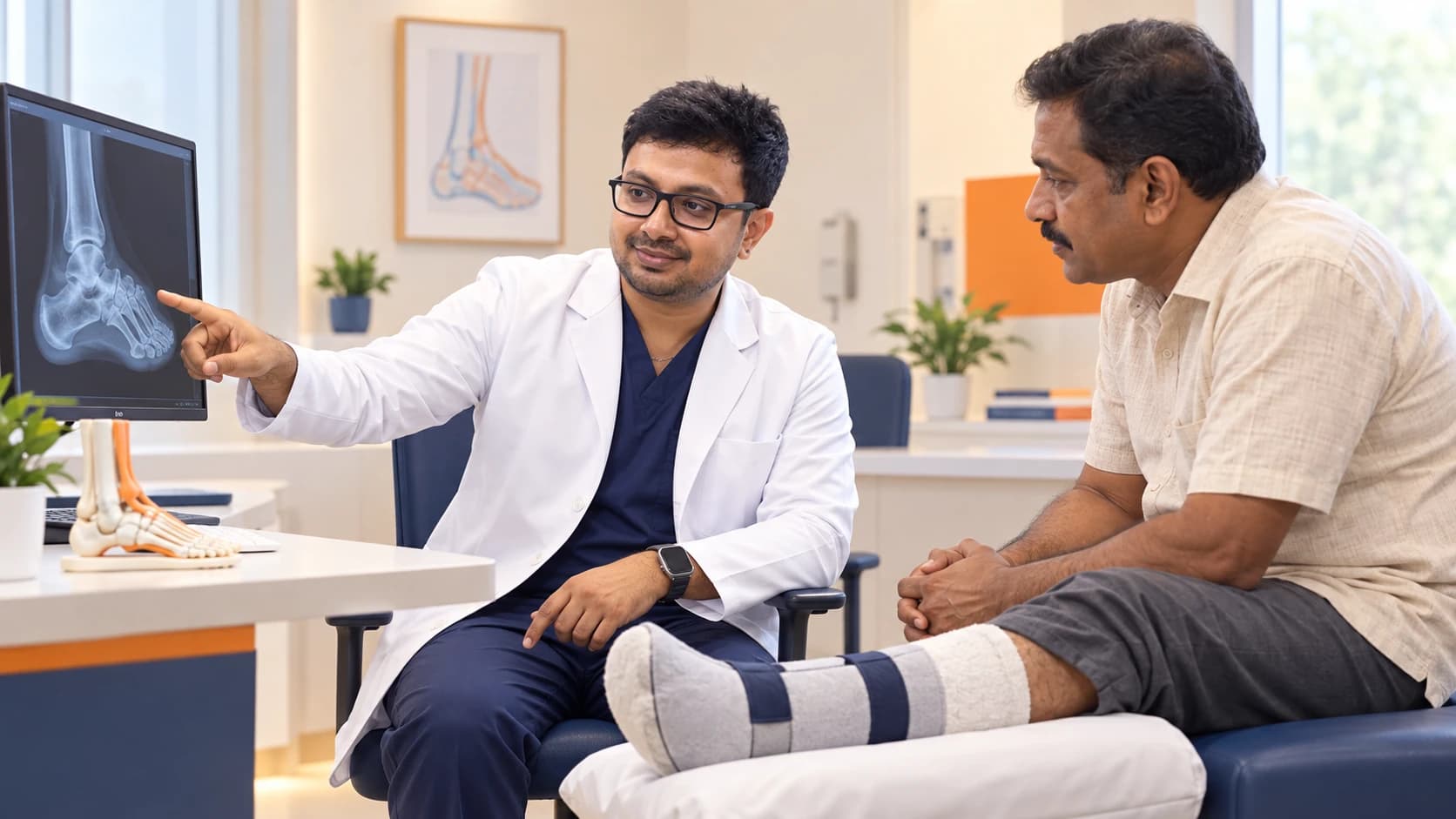
Simple daily habits help protect at-risk feet.
More foot-care guidanceCheck both feet and wash and dry carefully.
Avoid direct heat and barefoot walking.
Choose well-fitting footwear.
Seek advice early if something changes.
Common questions
Who may benefit from diabetic foot care?+
People living with diabetes may benefit from review if they have numbness, callus or pressure areas, a previous ulcer, footwear concerns, circulation symptoms or a new skin change.
What happens during an assessment?+
The clinician may review the skin, nails and any wound, sensation, pulses and circulation, pressure areas, footwear, foot shape and your history of diabetes-related foot problems.
How often should my feet be reviewed?+
The appropriate follow-up depends on your individual foot-risk findings and whether there is an active wound or changing symptom. Your clinician can explain the safest review plan.
Make an appointment
Looking for trusted diabetic foot care? You are in the right place.
Our team can help you understand what needs assessment and what information to bring. Diagnosis and treatment depend on an in-person review.
Specialist assessmentClear next stepsIndividual care planning

Dr. A. Nirupan Chakkaravarthy
Consultant Podiatrist · Limb Salvage Specialist
This guide is for general education and does not replace an in-person assessment.