
Numbness, tingling, burning or reduced feeling

Condition guide
Diabetic Neuropathy
Nerve changes linked to diabetes can reduce sensation and increase foot risk.
Numbness, tingling or reduced feeling can make injuries easy to miss.
Understanding the concern
The visible symptom is only part of the clinical picture.
Nerve changes linked to diabetes can reduce sensation and increase foot risk. Daily foot checks, appropriate footwear and regular professional review are important when sensation is reduced.
Clinical context
Symptoms and signs
Small changes deserve attention.
Not noticing heat, pressure or a small injury
Dry or cracked skin
Balance changes or altered walking confidence
Causes and risk factors
Several factors can come together.
Diabetic neuropathy is nerve damage associated with diabetes. Reduced protective sensation means an injury may not be felt even when it is becoming serious.
Long-standing or poorly controlled diabetes
Previous foot ulcer or callus
Smoking or poor circulation
Kidney disease and other diabetes complications
When to seek prompt care
Do not wait for symptoms to become severe.
Numbness, tingling or reduced feeling can make injuries easy to miss.
MMC evaluation
Assessment follows the whole clinical picture.
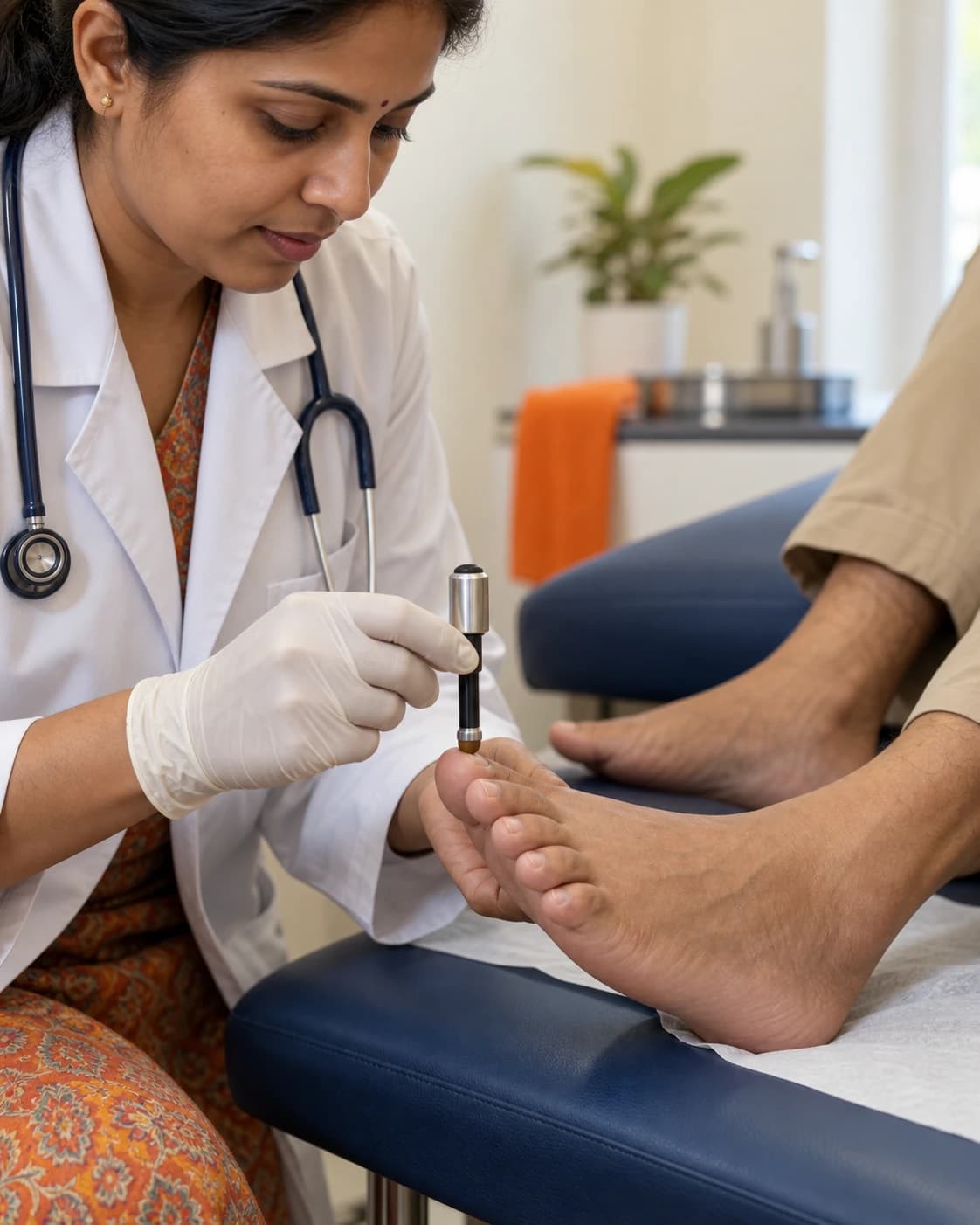
A foot-risk review may include sensation testing, vibration or monofilament assessment, skin and nail review, pulses, footwear and a discussion of symptoms and diabetes history.
Relevant care pathways
Care is matched to the condition and the person.
Screen and classify risk: Knowing sensation and circulation status helps guide prevention and follow-up.
Protect daily: Daily checks, safe footwear and avoiding barefoot walking are central to prevention.
Manage symptoms and risk: Your clinician may coordinate diabetes care, pain management and podiatry follow-up as needed.
Protect your feet between reviews.
Keep changes protected, avoid unadvised self-treatment and seek advice if symptoms worsen or do not improve.
The next step should be clear.
A timely assessment helps match care to the diagnosis, risk and practical needs of the person.
Common questions
When should I seek urgent care?+
Seek prompt medical advice for spreading redness, a new or worsening wound, discharge, fever, black or blue skin, sudden swelling, or a foot that becomes hot, cold or painful. If you feel very unwell, seek emergency care.
Can I treat this at home?+
Avoid cutting, draining, paring or applying unadvised products. The safest next step depends on your skin health, circulation, sensation and medical history.
What should I bring to my appointment?+
Bring recent reports, your medication list, photographs or details of changes over time, and the footwear you use most often when relevant.
Continue the care journey
The right next step depends on the clinical picture.
Explore the related pathways that may be discussed after assessment.


Make an appointment
A changing diabetic neuropathy deserves a careful clinical review.
Our team can help you understand what needs assessment and what information to bring. Diagnosis and treatment depend on an in-person review.
Specialist assessmentClear next stepsIndividual care planning

Dr. A. Nirupan Chakkaravarthy
Consultant Podiatrist · Limb Salvage Specialist
This guide is for general education and does not replace an in-person assessment.